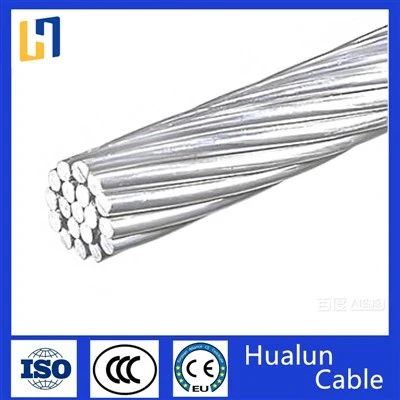

The LJ16 aluminum stranded conductor has a relatively small cross-sectional area. If bolted connections are used, the installation process becomes cumbersome; furthermore, it is difficult to ensure consistent torque across all bolts, which often leads to oxidation or loosening at the contact surfaces. In contrast, the logic behind the crimping method is straightforward: immense pressure-applied via hydraulic or manual tools-breaks down the oxide film on the aluminum surface, allowing the metal atoms of the two conductors to come into intimate, microscopic contact.
In practice, while a crimped joint may have a larger outer diameter, its internal structure forms a solid, unified mass. The primary advantage of this technique is "uniform force distribution," which prevents the stress concentrations that occur when force is applied at a single point. This makes it highly suitable for overhead lines or indoor wiring applications where the conductors must withstand a certain degree of tensile load. For the LJ16 specification, the cross-sectional area is sufficient to allow the crimping die to create a complete, interlocking pattern-a result that might not be achievable with thinner conductors.