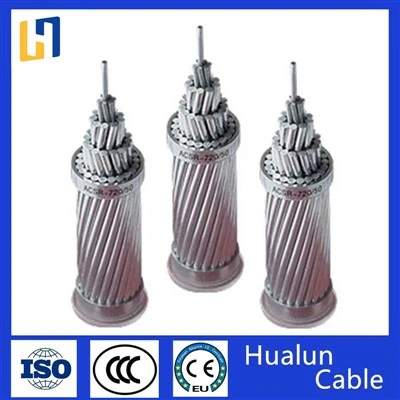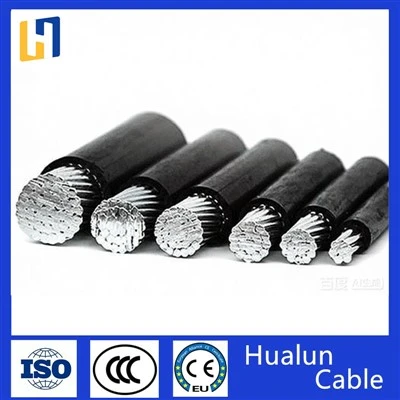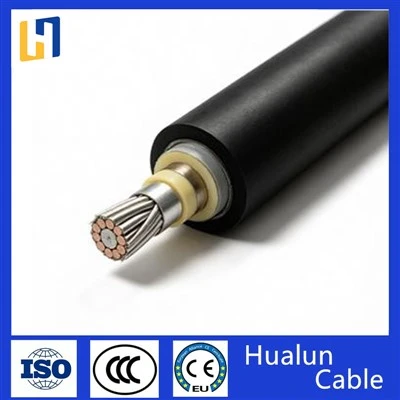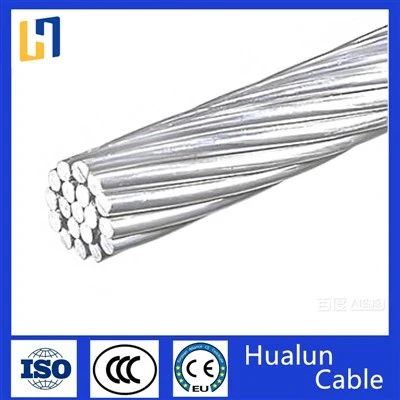

The traditional production process for heat-resistant aluminum alloy conductors primarily involves steps such as aluminum melting, in-furnace refining, in-line refining, continuous casting and rolling, wire drawing, and stranding.
In 2024, a research team led by Professor Li Zhenhua at Kunming University of Science and Technology, in collaboration with Beihang University, proposed a novel method to effectively enhance both the electrical conductivity and strength of heat-resistant aluminum alloy conductors under industrial production conditions. The core of this method includes refining alloy grains via continuous casting and rolling, employing an over-aging treatment to facilitate the full precipitation of dissolved zirconium (Zr) atoms-thereby boosting electrical conductivity-and utilizing cold drawing to achieve deformation strengthening. Through this process, the team successfully produced aluminum alloy conductors with a tensile strength of 195 ± 2 MPa, an electrical conductivity of 61.1% IACS, and a strength retention rate of 94% after being held at 280°C for one hour-setting a new performance benchmark for industrial-scale production.
Another advanced approach involves specific alloy compositions (incorporating elements such as Fe, Er, Zr, La, and Ce) and subjecting the rods obtained from continuous casting and rolling to a high-temperature heat treatment at 350–420°C for 30–50 hours. This process yields conductors with a single-wire strength of ≥170 MPa and an electrical conductivity of ≥61.5% IACS.
For Al-Zr-Sc alloys, which offer superior performance, research indicates that a processing route consisting of rapid solidification, hot deformation, aging, and cold drawing can effectively leverage grain-boundary strengthening, precipitation strengthening, and dislocation strengthening. This combination results in conductors that achieve an optimal balance of strength, electrical conductivity, and heat resistance.