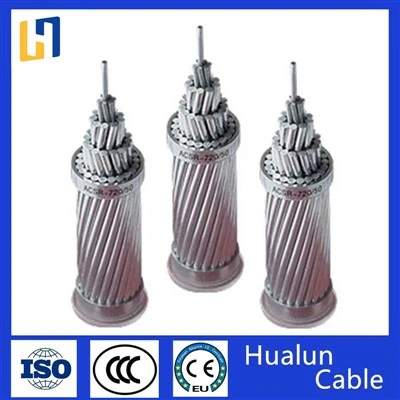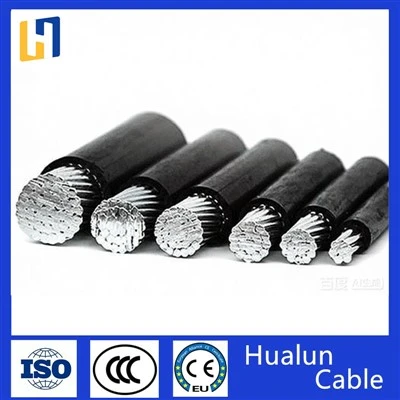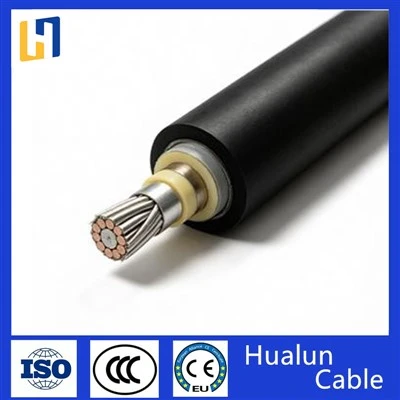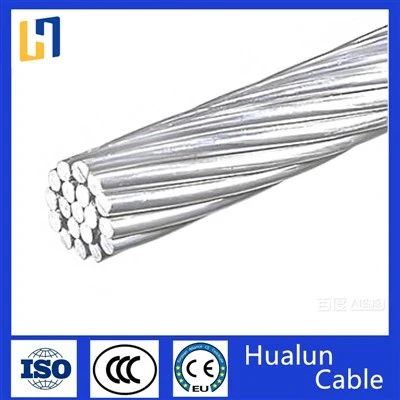

Heat-resistant aluminum alloy conductors play a vital role in power transmission. Their production process involves several key stages, which are detailed below.
Raw Material Preparation
The primary raw materials for heat-resistant aluminum alloy conductors are aluminum and various alloying elements, such as zirconium and yttrium. The addition of these elements significantly enhances the heat resistance of the aluminum alloy. First, the raw materials undergo rigorous quality inspection to ensure their purity and chemical composition meet production requirements. High-purity electrolytic aluminum is typically used, while alloying elements are introduced in the form of master alloys to ensure uniformity. The raw materials are weighed according to precise proportions-a process requiring high-precision weighing equipment to guarantee the accuracy of the alloy composition.
Melting
The weighed raw materials are charged into a furnace for melting. This process involves complex physical and chemical changes, requiring strict control over temperature and duration. Generally, the melting temperature is maintained between 700°C and 800°C, a range that allows the aluminum and alloying elements to fuse thoroughly. During this stage, refining agents and degassing agents are added to the furnace. Refining agents react with impurities to form dross, which can then be easily removed, while degassing agents eliminate gases-such as hydrogen-from the molten aluminum, thereby improving the quality of the alloy. Continuous stirring is also necessary during melting to ensure an even distribution of the alloying elements.
Casting
Once melted, the aluminum alloy is transferred to casting equipment. Common casting methods include continuous casting and rolling, as well as semi-continuous casting. In the continuous casting and rolling process, the molten alloy is continuously poured into a crystallizer to form a cast billet, which is then immediately rolled; this method offers high production efficiency and consistent product quality. In semi-continuous casting, the molten alloy is poured into molds in batches to produce ingots, which undergo further processing. Throughout the casting process, parameters such as casting speed and cooling rate must be carefully controlled to ensure the quality of the billets or ingots. For instance, an excessively fast cooling rate may cause cracks in the billet, while a cooling rate that is too slow can negatively affect grain size and distribution.
Rolling
After casting, aluminum alloy billets must undergo rolling to achieve the required shape and dimensions for the wire. The rolling process typically consists of two stages: rough rolling and finish rolling. Rough rolling reduces the billet to a specific thickness-forming a plate or rod-while finish rolling further refines the wire's dimensional precision and surface quality. Throughout the rolling process, parameters such as rolling force, speed, and temperature must be carefully controlled. Excessive rolling force can cause surface cracks, while an overly high rolling speed may compromise dimensional accuracy. Furthermore, rolling temperatures that are either too high or too low can adversely affect the wire's performance characteristics.
Heat Treatment
Following the rolling process, the wire undergoes heat treatment to enhance its heat resistance and mechanical properties. This typically involves solution treatment and aging. During solution treatment, the wire is heated to a specific temperature, allowing alloying elements to fully dissolve into the aluminum matrix; it is then rapidly cooled to form a supersaturated solid solution. In the subsequent aging process, the wire is held at a lower temperature for a set period, causing the alloying elements within the supersaturated solid solution to precipitate as fine, strengthening phases-thereby increasing the wire's overall strength and heat resistance. Precise control over both temperature and duration is essential to ensure the effectiveness of the heat treatment.
Wire Drawing
Once heat-treated, the wire undergoes a drawing process to achieve the desired diameter. This involves pulling the wire through a series of drawing dies, which gradually reduce its cross-sectional size. The dimensions and surface quality of these dies significantly influence the final quality of the wire. During drawing, the speed and tension must be strictly regulated to prevent wire breakage or surface damage. Additionally, lubricants are used to minimize friction and wear throughout the process.
Surface Treatment
Finally, the wire undergoes surface treatment to improve its corrosion and oxidation resistance. Common methods include painting or galvanizing. Applying a protective coating-such as paint-creates a barrier that shields the wire from the external environment, thereby extending its service life. Galvanizing involves applying a layer of zinc to the surface of a conductor; zinc possesses excellent corrosion resistance and can effectively protect the conductor.
The production of heat-resistant aluminum alloy conductors is a complex system engineering process. Every stage requires strict control to ensure that the conductor's quality and performance meet the specified requirements. Only in this way can high-quality heat-resistant aluminum alloy conductors be produced to satisfy the demands of sectors such as power transmission.