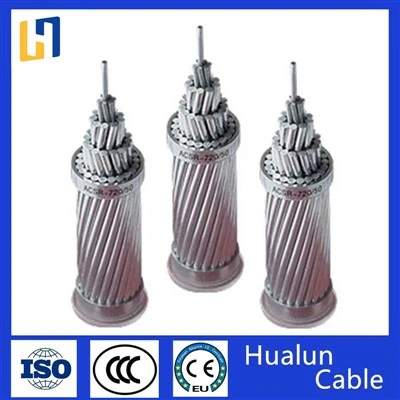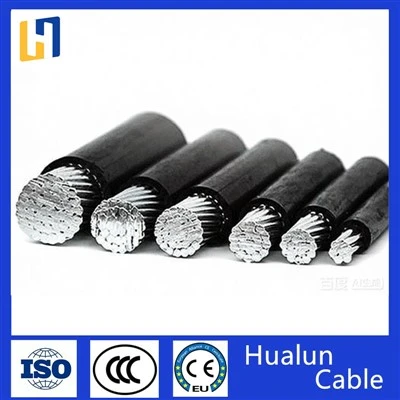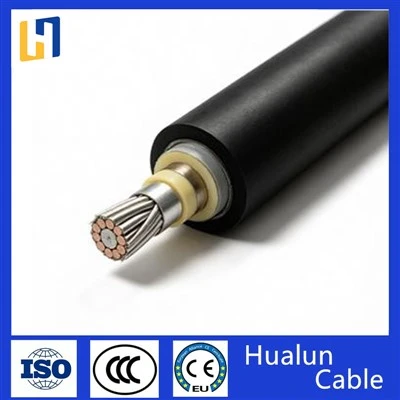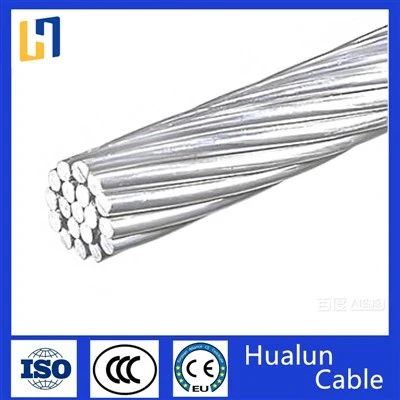

Bare wires and bare conductor products are generally categorized into four types: bare single wires, bare stranded wires, flexible connectors and braided wires, and shaped wires or profiles. Their primary characteristic is that they consist solely of conductive metal, lacking any insulation or protective sheathing. They are manufactured primarily through pressure-based processes, such as smelting, rolling, drawing, stranding, or compact stranding.
Bare single wires include round or flat non-ferrous metal wires, tinned wires, and bimetallic wires.
Bare stranded wires are primarily used as overhead conductors; they are not classified by voltage rating, as insulation is provided by external arrangements. Common types include aluminum stranded wires (LJ), copper stranded wires, aluminum alloy stranded wires, and aluminum conductor steel-reinforced (ACSR/LGJ) cables. ACSR cables feature a steel core for mechanical strength, surrounded by aluminum wires for power transmission. Due to their simple structure, low cost, and high capacity, they are widely used in long-distance, long-span overhead power transmission and distribution lines across various voltage levels. Plain aluminum stranded wires are typically used for shorter distances or shorter spans, while ACSR cables are employed for longer spans.
Flexible connectors and braided wires are highly pliable conductors made by bundling, multi-stage stranding, or braiding very fine individual wires-all of which are made of copper. Common examples include brush leads and battery cables.
Shaped wires and profiles are non-circular bare conductive products. These include copper busbars (e.g., TMY type) and aluminum busbars (e.g., LMY type)-used as busbars in power transformation and distribution systems or as low-voltage overhead busbars in workshops-as well as contact wires for overhead catenary systems, various custom-shaped bars, and flat steel bars (e.g., 25x4, 40x4, etc.), which are frequently used for grounding conductors and lightning protection (shield) wires.