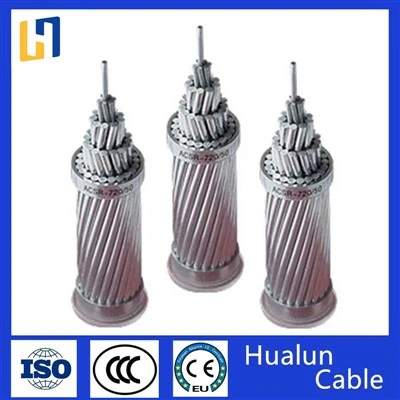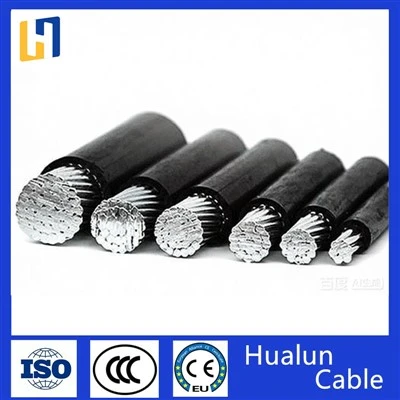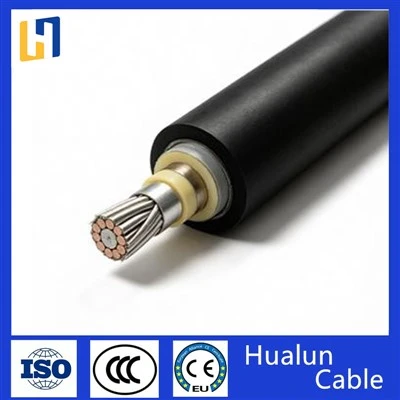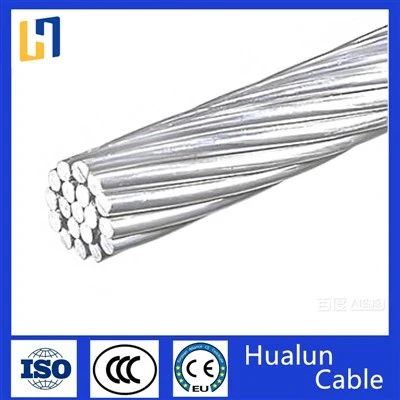

The current-carrying capacity (ampacity) of a stranded conductor is defined as the maximum current it can continuously carry while operating at its maximum allowable temperature. This maximum allowable temperature is determined based on the criterion that, after 30 years of service, the conductor's strength loss should not exceed 7% to 10%.
Taking a 240 mm² conductor as an example, a standard aluminum conductor steel-reinforced (ACSR) cable has a current-carrying capacity of 546 A (at 80°C). In contrast, a high-capacity conductor of the same cross-sectional area-utilizing heat-resistant aluminum alloy materials-can reach a capacity of 1223 A, which is 2.24 times that of the standard ACSR. In practical engineering applications, the capacity of high-capacity conductors varies based on specific models and operating conditions. For instance, in a 110 kV line retrofit project, a high-capacity conductor with a cross-sectional area of 191.91 mm² and an outer diameter of 16.8 mm was found to have a maximum current-carrying capacity of 929 A at a continuous operating temperature of 210°C, and up to 1008 A at 240°C (for a duration of up to 400 hours). Overall, for a given outer diameter and unit weight, the current-carrying capacity of a high-capacity conductor is approximately 1.6 to 2.0 times (or more) that of a standard ACSR cable.
With technological advancements, new types of conductors have emerged, such as HHS (High-Strength, High-Conductivity, Low-Sag) high-capacity conductors. These feature aluminum conductors with a conductivity of at least 62.5% IACS-exceeding the 61.0% IACS requirement for aluminum used in conventional ACSR-thereby achieving both increased capacity and improved energy efficiency.